
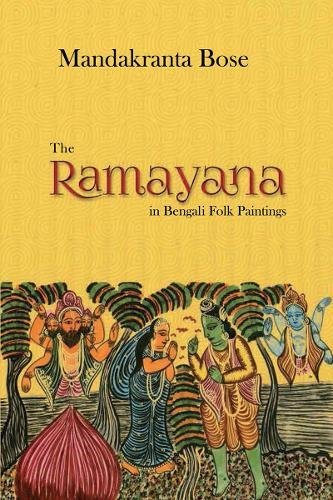
The images presented in this book transport us into the heart of India’s rich folk tradition. Of that heritage, the display of paintings accompanied by recited or sung comments has been a part of it since very early times, as attested by references and legends in Sanskrit sources, including the Hariacarita, a 7th-century work by Baabhalla. Known as palacitras or palas in short, these illustrated narratives on rectangular fabric or paper as well as on scrolls are a type of performed art that reaches out to audiences, primarily rural, conveying the artists’ responses to legends and social themes of common knowledge across a wide range of audiences from varied social and cultural bases. A compelling class of such paintings, which come from the Bengali-speaking region of eastern India, comprises the depiction of events from the Ramayana in the form of scrolls that are unrolled as the painter displays and explicates them. The vividly colourful images presented in this book occupy a special niche in the history of Indian art, remarkable because they are not only visual objects but narrative expositions of a text that has been part of the lives of vast numbers of the Indian people and often their source of moral guidance. Especially remarkable is that these palas by Bengali folk painters diverge so frequently from the magisterial Ramayanas of Adikavi (“First Poet”) Valmiki, leaving out essential parts of it and importing episodes from local narrative caches into the Rama saga. Following conventions of both art and storytelling, these portrayals constitute what is now recognised as the tradition of counter-Ramaya, as it embodies alternative alignments of ethical judgment.
| Weight | 440 g |
|---|---|
| Dimensions | 236 × 159 × 13 mm |
| Cover Type | Hardbound |